

The issue
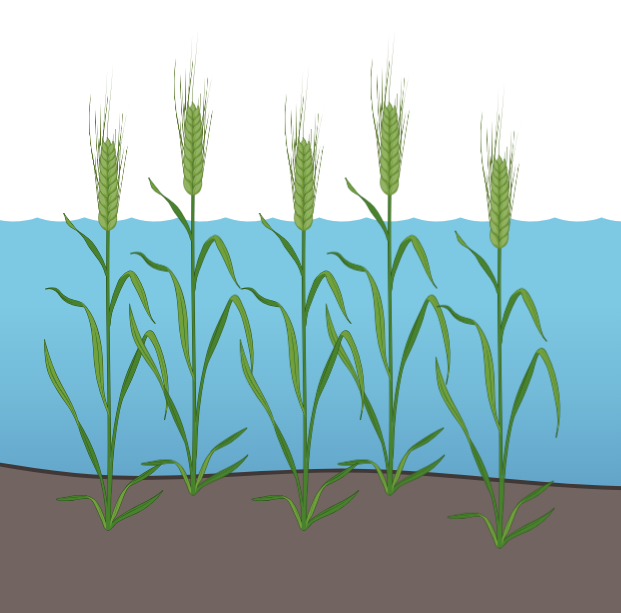
Flooding was ranked the second most significant abiotic stress in 2024, and is predicted to increase globally due to climate change. There is therefore a pressing need for crops with improved submergence tolerance. One of the primary stresses caused by flooding is low oxygen levels, known as hypoxia. Our research focuses hypoxia sensory and signalling networks within plants, with the aim of engineering the stress pathway to increase tolerance to flooding-induced hypoxia and reduce crop losses to help safeguard global food security in the face of climate change.
The stress response
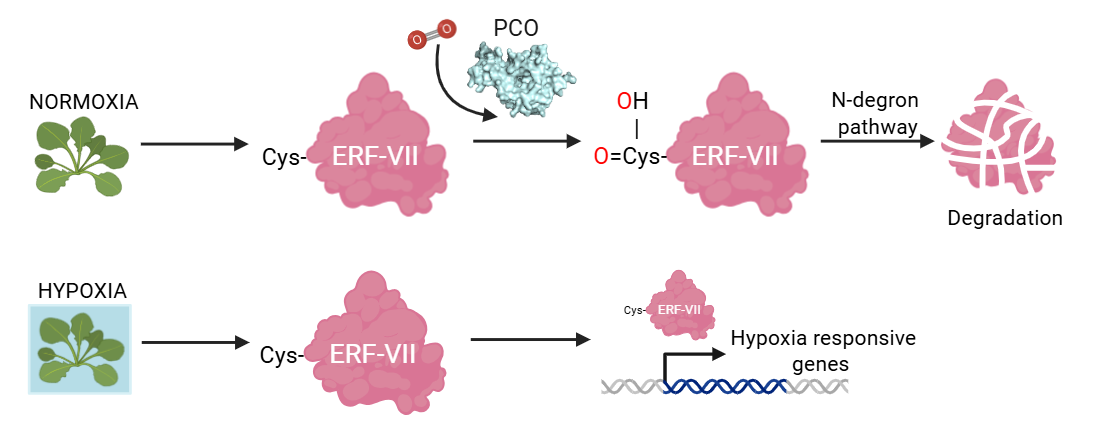
Hypoxic signalling in plants is moderated by the oxygen-dependent N-degron pathway:
- Under normal oxygen levels, referred to as 'normoxia', the N-terminal cysteine of ERF-VII transcription factors is oxidised by plant cysteine oxidase (PCO) enzymes using oxygen as a co-substrate. The oxidation of ERF-VII targets it for ubiquitination and subsequent proteolysis.
- Under hypoxia, PCOs are unable to oxidise ERF-VIIs. The subsequent stabilisation of ERF-VIIs allows the transcription factors to accumulate in the nucleus where they upregulate the expression of hypoxia responsive genes.
Our areas of study
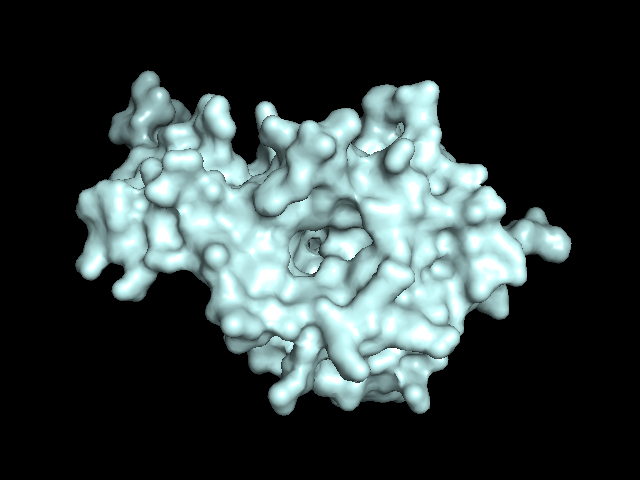
Engineering PCOs
Plant cysteine oxidases bridge the gap between atmospheric oxygen levels and the hypoxic stress response. We use a structural and functional understanding of PCOs to engineering novel mutants, with the goal of producing enzymes with higher sensitivity to oxygen such that the hypoxic stress response is triggered faster and is more prolonged. Our work also aims to characterise the kinetic properties of different wildtype PCOs such as PCO1-5 in Arabidopsis.
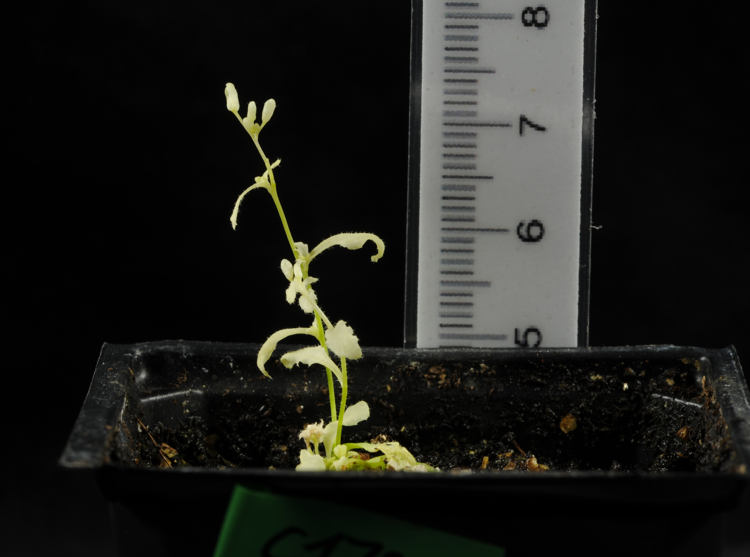
Understanding the hypoxic stress response
The manipulation of Plant Cysteine Oxidase enzymes requires a detailed understanding of the signalling pathways regulating their activity. We study regulators of PCO activity, such as peptides and small molecular modulators, as well as the role of Reactive Oxygen Species in ERF-VII stabilisation to understand how the stress response is regulated upon both submergence and de-submergence.